
On this page
First decide whether this is a new installation, a multi-device setup, or a continuation of your existing ClashX workflow
For a new Mac where you want to stay current with Mihomo and macOS permission changes, start with Clash Verge Rev. If you want a similar interface across Android, Linux, and Mac, choose FlClash.
If your existing ClashX Pro setup is still stable and you do not need new protocols or TUN, there is no reason to migrate just for a different interface. Also consider Apple silicon, system proxy behavior, TUN permissions, and your menu bar habits.
macOS comparison table
| Usage pattern | Recommendation | Why |
|---|---|---|
| New installation that should track current Mihomo and system updates | Clash Verge Rev | Actively released, with complete Profile, log, backup, and TUN management |
| Use the same interface on Android or Linux | FlClash | The official project maintains builds for Android, Windows, macOS, and Linux |
| Already rely on the long-established ClashX menu bar workflow | Keep ClashX/Pro for now, then evaluate migration | Existing configurations and workflows are inexpensive to keep, but verify current project documentation before relying on new protocols or enhanced mode |
Start with the facts that official pages still confirm in 2026
Clash Verge Rev v2.5.2 was released in 7/2026. Official Apple silicon and Intel builds remain available, and macOS service, DNS, and backup issues continue to receive attention. It suits users who want documentation, installers, and new system permissions to stay in sync.
The official FlClash repository explicitly supports Android, Windows, macOS, and Linux. Its advantage is a similar workflow across devices, not more system-level capabilities on macOS than every other client.
ClashX-Pro/ClashX is a third-party continuation created after the original ClashX stopped being publicly maintained; it is not the original official yichengchen/clashX repository. It currently documents compatibility fixes for macOS 10.14+ and macOS 15, and directs needs such as Enhanced Mode and newer protocols to ClashFX. New users should verify its source, maintenance path, and core capabilities first.
Interface differences show up in these specific actions
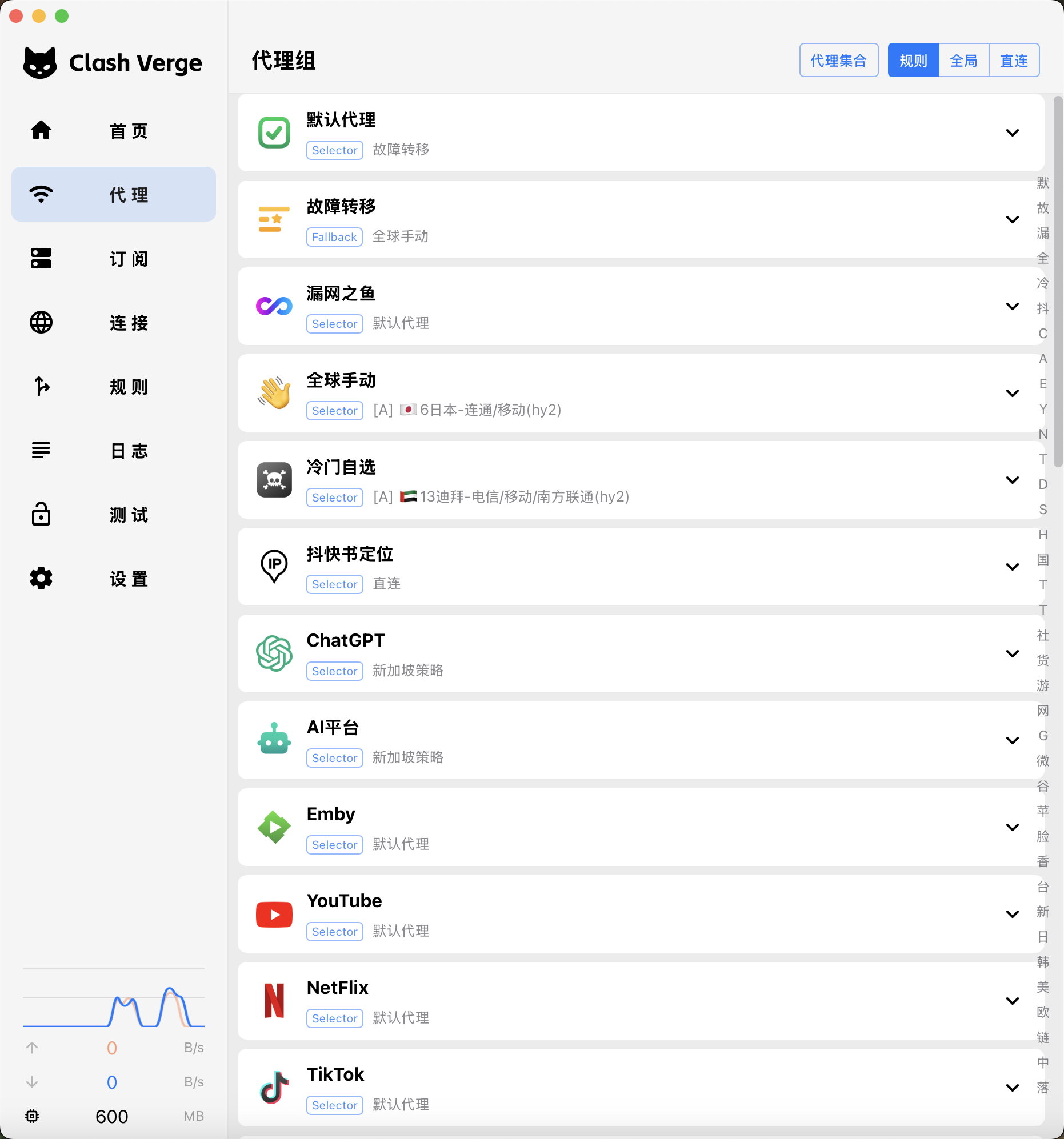
- Clash Verge Rev
- Manage Profile, policy groups, connections, rules, and Merge in dedicated screens; a good fit if you frequently trace where a specific request went.
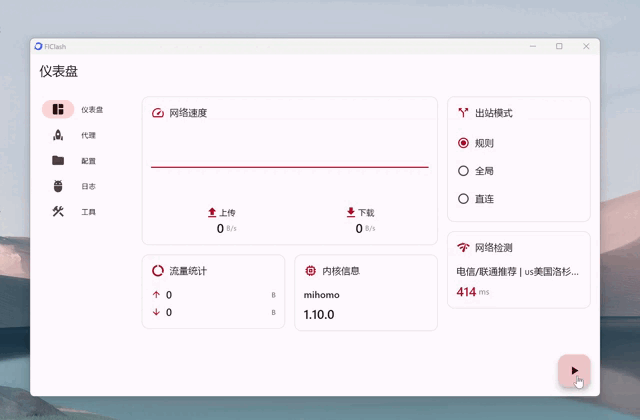
- FlClash
- Desktop and mobile entry points are similar, which works well for multi-device users, but Mac permissions for the system proxy, background operation, and TUN still require separate setup.
- ClashX / Pro
- Designed primarily for quick menu bar switching. The default configuration directory is ~/.config/clash, and config.yaml or custom configurations can be selected from the menu.
How system traffic capture compares
| Item | Clash Verge Rev | FlClash | ClashX / Pro |
|---|---|---|---|
| System proxy | Toggle it and inspect connections in the full window | The entry point resembles the mobile version, but Mac still uses its own system permissions | Quick menu bar toggle, ideal for lightweight switching |
| TUN / enhanced traffic capture | Install the service for the current version before authorizing the network extension | Grant permission through the current version's entry point; do not copy Android settings | Enhanced Mode and the newer Mihomo TUN do not follow the same migration path |
| Sleep and network switching | After closing the lid, waking, and quitting, separately confirm that the service and proxy recover correctly | A consistent cross-device interface does not mean background behavior is identical on Mac | You can keep a stable existing workflow, but verify compatibility with newer systems |
If you update a subscription once a day and occasionally switch nodes, the menu bar's short path is appealing. If you maintain multiple subscriptions, inspect the final merged configuration, or export logs, a full window reduces time spent hunting for files. There is no abstract “more advanced interface” here—only whether you will actually open these screens each week.
Before switching clients, quit the old system proxy and service
The easiest detail to miss in a comparison is that both apps may change the system proxy or leave a background service running. If a port is occupied or the network breaks after quitting, clear the old state before judging the client's stability.
Safe comparison
Record the old configuration
Save the subscription, custom rules, current ports, and the mode actually enabled from the menu bar.
Disable the old TUN and system proxy
Quit the app completely, then confirm in macOS network settings that no HTTP, HTTPS, or SOCKS settings remain.
Start one new client
Begin with the system proxy and a fixed node; do not add both apps as login items.
Test sleep and network switching
After waking from a closed lid and after switching Wi-Fi, visit a site and inspect the connection log each time.
Test for one evening, then decide based on the results
You do not need to install all three clients as permanent login items at once. Spend one evening testing lid close, wake, and Wi-Fi switching, then keep the best fit the next day based on real results.
Observed result
| Result | Decision |
|---|---|
| Required Profile, overrides, and logs all work directly | Prefer keeping Clash Verge Rev |
| Switching among multiple devices is clearly easier, and Mac sleep behavior is stable | Prefer keeping FlClash |
| The existing ClashX configuration remains stable, and you need neither new protocols nor TUN | Keep it for now; do not migrate only for a new interface |
| Both clients show port conflicts or break networking after exit | Clean up the old service and residual proxy settings before evaluating either client |